

 English
 русский
 中文简体
中文简体 Español

Comparing Lawn Mower Blade Materials: Steel, Carbon, and More
Jul 17, 2026
Understanding Blade Material as the Foundation of Cutting Performance
Every lawn mower blade begins its life as a slab of raw metal, and the specific alloy chosen at that stage determines almost everything that follows: how long the edge stays sharp, how well the blade resists bending on rocky terrain, and how quickly it corrodes in humid storage sheds. Homeowners and landscaping crews often focus on blade shape or mower horsepower, but material composition is the quiet variable that separates a blade lasting one season from one lasting five.
This article breaks down the metallurgy behind common blade types, compares their real-world tradeoffs, and explains how treatments like heat tempering and anti rust coatings extend service life without requiring constant sharpening or replacement.
Core Material Categories Used in Blade Manufacturing
Most blades fall into a handful of material families, each with distinct mechanical properties suited to different mowing conditions.
High Carbon Steel
High carbon steel remains the most widely used base material because it strikes a practical balance between hardness and cost. The carbon content, typically in the range associated with tool-grade steels, allows the metal to be hardened through heat treatment while still retaining enough flexibility to absorb impact from small stones or roots without snapping outright.
Alloy Steel
Alloy steel blends in elements such as manganese, chromium, or silicon to improve wear resistance and toughness beyond what plain carbon steel offers. These blades tend to hold an edge longer under abrasive conditions, such as mowing over sandy or gritty soil, though they generally cost more to produce.
Stainless Variants
Stainless formulations trade some hardness for significantly improved corrosion resistance. They are less common in heavy-duty rotary blades but appear in specialty or coastal-use products where salt air accelerates rust on standard steel.
| Material Type | Edge Retention | Impact Resistance | Rust Resistance | Typical Cost Tier |
|---|---|---|---|---|
| High Carbon Steel | Moderate to High | High | Low without coating | Standard |
| Alloy Steel | High | Moderate to High | Moderate | Mid to High |
| Stainless Steel | Moderate | Moderate | High | High |
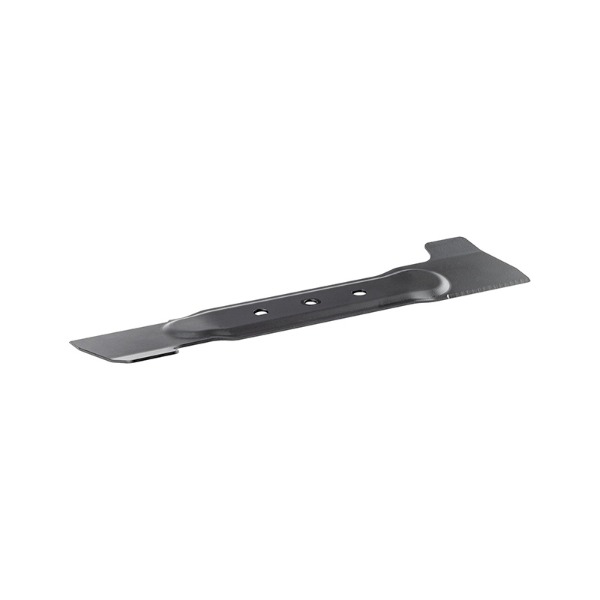
Why Heat Treatment Changes Everything About Blade Durability
A heat treated lawn mower blade undergoes a controlled process of heating and rapid cooling, followed by tempering, which rearranges the internal crystal structure of the steel. This process is what allows a blade to be simultaneously hard enough to hold a sharp edge and tough enough to avoid shattering when it strikes a buried root or stone.
Untreated or improperly treated steel tends to either dull quickly under normal grass-cutting friction or become brittle and prone to cracking. Manufacturers that invest in precise heat treatment cycles, often involving induction hardening followed by tempering at controlled temperatures, produce blades with a more consistent hardness profile from tip to center.
A blade that loses its edge after a handful of mowing sessions is rarely a design flaw; it is almost always a metallurgy shortfall in how the steel was hardened and tempered during manufacturing.
Signs of Proper Heat Treatment
- Consistent color and texture along the blade edge after grinding
- Resistance to visible warping after routine impacts with debris
- Edge that dulls gradually rather than chipping in small fragments
- Ability to be resharpened multiple times without losing structural integrity
Corrosion Control: The Role of Anti Rust Treatments
Moisture is the primary enemy of any steel blade left in a garage, shed, or attached mower deck between uses. An anti rust lawn mower blade typically achieves its resistance through one of several surface treatments applied after the shaping and hardening stages.
Common Corrosion Protection Methods
| Treatment Method | How It Works | Relative Durability |
|---|---|---|
| Powder Coating | Applies a polymer layer that seals the metal surface from air and moisture | High, resists chipping |
| Electroplating | Deposits a thin protective metal layer through an electrochemical process | Moderate to High |
| Oil-Based Coating | Temporary film applied for short-term storage protection | Low, requires reapplication |
| Black Oxide Finish | Converts the surface layer chemically to resist oxidation | Moderate |
For regions with high humidity or coastal salt exposure, blades with a durable coating like powder coating or electroplating tend to outperform bare steel by a wide margin over multiple mowing seasons.
Matching Blade Geometry and Material to Mowing Needs
Material selection works alongside blade design to determine overall performance. The most common configurations include:
- Rotary mower blade designs, which use a straight or slightly curved edge for general-purpose cutting
- Mulching lawn mower blade variants, featuring curved cutting surfaces that recirculate clippings for finer discharge
- High lift lawn mower blade types, engineered with a steeper wing angle to generate stronger airflow for bagging applications
- Low lift lawn mower blade options, which reduce airflow and are often preferred on dry or sandy terrain to limit dust
- Riding mower blade and lawn tractor blade models, generally longer and thicker to handle wider cutting decks
- Commercial lawn mower blade grades, built with reinforced thickness and higher-grade alloys for daily heavy use
Choosing Based on Lawn Conditions
A residential lawn with light, consistent grass may perform well with a standard carbon steel blade under moderate heat treatment. A commercial operation cutting dense or wet grass daily benefits more from alloy steel blades with reinforced tempering, since the added toughness reduces mid-season replacements.
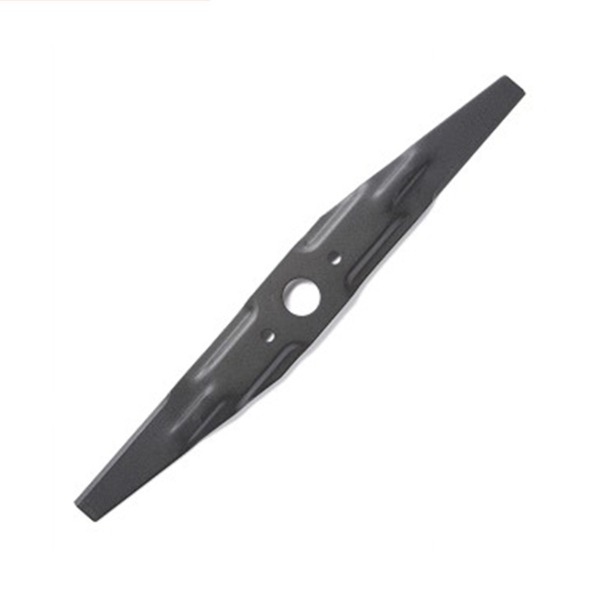
How a Blade Moves from Raw Steel to Finished Product
Understanding the manufacturing sequence clarifies why material quality at each stage compounds into the final product's performance.
Why Each Stage Matters
- Raw steel grade sets the ceiling for hardness and toughness achievable later
- Precision cutting ensures balanced weight distribution, reducing vibration during operation
- Heat treatment locks in the hardness-to-flexibility ratio for the blade's working life
- Coating and balancing finalize corrosion resistance and smooth rotational performance
Custom and Replacement Blade Considerations
Buyers sourcing a custom lawn mower blade or a replacement lawn mower blade should evaluate more than just physical dimensions. Matching the original hole pattern and length is necessary for safe mounting, but material grade should also match or exceed the original specification to avoid a downgrade in durability.
Checklist for Replacement Blade Selection
- Confirm center hole diameter and mounting hole spacing match the deck
- Verify blade length corresponds to the mower deck size
- Check for a stated hardness rating or heat treatment specification
- Look for corrosion protection suited to your climate and storage conditions
- Consider wing angle if airflow for bagging or mulching is a priority
Extending Blade Life Through Maintenance Practices
Even the highest grade steel benefits from consistent care. Cleaning grass buildup from the underside of the deck after each use prevents moisture retention against the blade surface, which is one of the fastest ways rust develops even on coated blades.
Sharpening technique also matters. Removing too much material in a single pass generates excess heat at the edge, which can undo some of the benefits of factory heat treatment by softening the tempered layer. Light, incremental sharpening preserves the hardened edge for more cycles.
Clean After Use Sharpen Incrementally Store Dry Balance After Sharpening
Frequently Asked Questions
Q1: What is the main advantage of a heat treated lawn mower blade over an untreated one?
Heat treatment increases the hardness of the cutting edge while maintaining enough flexibility to resist cracking, resulting in a blade that stays sharp longer and withstands impacts more reliably.
Q2: How often should a lawn mower blade be replaced?
This depends on usage frequency and terrain, but most blades benefit from inspection every mowing season, with replacement recommended once the edge cannot be resharpened effectively or visible bending is present.
Q3: Does an anti rust lawn mower blade eliminate the need for maintenance?
No. Coatings significantly slow corrosion but do not make a blade maintenance-free. Cleaning debris and storing the mower in a dry area remain important even with a treated blade.
Q4: Are alloy steel blades always better than carbon steel blades?
Not necessarily. Alloy steel often provides better edge retention and wear resistance, but high carbon steel with proper heat treatment can offer comparable toughness at a lower cost for typical residential use.
Q5: What should I look for when selecting a lawn mower blade manufacturer?
Look for clear documentation of steel grade, heat treatment process, and corrosion protection method, along with consistent quality control practices that ensure balanced, properly hardened blades.
Contáctenos y obtenga una cita
de prioridad para conocer nuestros nuevos productos
 Dirección: Al norte de la Calle Guo´an, Zona de desarrollo económico, Condado de Guangde, Provincia de Anhui, China
Móvil: +86-13967663706
Correo electrónico: [email protected]
Dirección: Al norte de la Calle Guo´an, Zona de desarrollo económico, Condado de Guangde, Provincia de Anhui, China
Móvil: +86-13967663706
Correo electrónico: [email protected]
Derechos de autor © 2025 Anhui Boxing Machinery Co., Ltd Todos los derechos reservados.Fabricantes Chinos de Cuchillas para Cortacésped de Grado Industrial Personalizadas
